
TCDI Talks | Episode 16
Home / Webinars / TCDI Talks / The Importance of Cross-Departmental Collaboration in eDiscovery | TCDI Talks: Episode 16
The Importance of Cross-Departmental Collaboration in eDiscovery
About TCDI Talks: Episode 16
What happens when forensics, project management, and document review operate as one connected team across the EDRM? Join Erin Swakopf (Forensics Operations Manager), Jason Bentley (Project Director, Client Services), and Jennifer Andres (VP, Military Spouse Managed Review Program) as they explore this question in depth.
In this 16-minute episode, the team shares real examples, including how they reduced a 37 million document population to just five million under a fast-approaching deadline, and explains how clear communication, early alignment, and mutual trust remove unnecessary risk and client burden from the process. This conversation highlights what is possible when every phase of eDiscovery is working toward the same outcome from day one.
Episode 16 Transcript
0:03 – Michael Gibeault
Welcome to TCDI Talks, where we spotlight the people and ideas driving innovation in legal services and technology. I’m Michael Gibeault, your host, and today, we’re focusing on one of the most powerful drivers of success in eDiscovery, and that’s cross-departmental collaboration.
We’re joined by three of our TCDI experts who work together across every phase of the EDRM. Erin Swakopf from our Digital Forensics team, Jason Bentley from Client Services, and Jennifer Andres from our Managed Document Review department.
Welcome to TCDI Talks.
0:42 – Jason Bentley
Thanks, Michael.
0:43 – Michael Gibeault
So, at TCDI, collaboration is at the core of how we deliver efficient, defensible results for our clients. From the earliest stages of data collection to final review and production, our teams work hard and hand-in-hand to reduce risk, improve efficiencies, and ensure every project runs smoothly.
We’re looking forward to hearing about this from our team here and the collaborative approach that enhances client outcomes and strengthens every step of the discovery process.
So, let’s sort of set the stage, and if each one of you — Erin, why don’t you start — can you share with us a little bit about your role and where it fits within the eDiscovery process?
1:30 – Erin Swakopf
Sure. So, again, my name is Erin Swakopf. I’m the Manager of Forensic Operations here at TCDI. My role focuses on the earliest stages of the EDRM, so identifying, preserving, and collecting electronically stored information in a defensible way. We ensure the data is handled securely and has a strong foundation for the rest of the eDiscovery lifecycle.
1:52 – Michael Gibeault
Right. And Jason?
1:55 – Jason Bentley
Yeah. Thanks, Michael. Jason Bentley, Client Services Project Director, attorney, and, I work closely and hand-in hand with the client to understand their needs, their goals, as well as outside counsel teams.
And then I also work internally very closely with Erin’s team, Jenn’s team. From, collection, processing, review, and eventual production of client data. And then, you know, following up on that with post-production support, as needed, for client and outside counsel teams.
2:28 – Michael Gibeault
Last but not least, Jennifer.
2:31 – Jennifer Andres
Thanks, Michael. I’m Jennifer Andres. I’m the VP of our MSMR Program at TCDI. That’s our Military Spouse Managed Review, which is our managed document review line. We’re towards the end of the spectrum on the EDRM model.
We help with reviewing the documents that are potentially needed for production, organizing those into production versus non-producible documents, and then coordinating closely with teams like Jason’s to get those productions going and into processing and then supporting clients throughout the review.
3:06 – Michael Gibeault
So, Jenn, let’s start with you. When people think of eDiscovery, they often picture separate teams for forensics, project management, and then review. So, why is collaboration across these teams so important?
3:20 – Jennifer Andres
Yeah, I mean it’s really important, because communication is always key. And when you keep these teams separate, one piece of the pie is going to have more knowledge, more context, more insight as to what’s needed for the overall output than the other teams.
So, for example, if forensics has one team brought in, and it’s separate and apart from review and we have no idea what’s been collected, we don’t know what to look out for.
So, if there’s a certain custodian that is super important or that we really need to be on the lookout for — some type of potential technical issue documents that we need to be flagging — if we’re not aware of those early on discussions and things that could be a, “Please red flag these items during review,” then we won’t know.
So, it’s helpful for us to be on from the beginning to understand all of the things that there are, you know, there are concerns about. The things that we want to be paying attention to and potentially need to escalate. And we won’t have that insight if we’re not engaged early on in that process.
4:15 – Michael Gibeault
Jason, what are some of the common challenges that eDiscovery teams face when these departments work in silos?
4:23 – Jason Bentley
When you start working in silos, I think being able to efficiently manage all the data and all the supporting workflows is a huge challenge.
You know, at TCDI — really back in about 2019 – 2020, we took a new approach to it, and we took our Lean Six [Sigma] model, legal defense of process, and our business process management tools, and really combined them into one tightly intertwined discipline that would really come to define how we conduct ourselves.
In doing this, we created a new structure which enabled us to get very innovative with our eDiscovery approach and really enhance our cross-collaboration amongst our internal teams.
And, you know, the Defensible Process Management, as we call it, the DPM, is really a discipline that we created of treating our processes as our assets, and that directly drives defensibility of outcome. And it really advances the collaboration that our cross-functional teams have.
5:40 – Michael Gibeault
And Erin, how does early involvement from digital forensics impact downstream phases like processing and review?
5:50 – Erin Swakopf
Yeah, I love when forensics can get involved as early as possible so we can influence the entire flow of the EDRM. If we can understand what data sources are in play, how that data will be eventually reviewed, we can make sure to collect it in a way that minimizes duplicates, ensures metadata preservation, and speeds up processing. That proactive approach often saves us time and our clients money.
6:17 – Michael Gibeault
So, from a project management perspective, Jason, what are the biggest benefits of aligning with forensics and the review teams early on?
6:26 – Jason Bentley
It’s integral. I can speak to a great example of a project that Erin and I are currently working on. It’s a huge forensics undertaking. And, you know, we have to understand what she is collecting, the processes she’s going through to collect it, so we have a good understanding of what the data is as it’s coming in. And we can also work collectively together on ways to cull data populations to really target specific collections and help manage cost for the client by not over collecting and getting things that we don’t need.
And then on the flip side, you know, engaging Jenn’s team and review is a key piece also, because they need to have that understanding. What’s been collected? What’s been processed? What’s the nuances of the data? And that helps streamline how her teams organize and approach it from a review management standpoint.
So, the collaboration early on between all three groups is really integral to overall project success.
7:36 – Michael Gibeault
So, Jenn, can you share an example of how collaboration across the EDRM helped reduce risk and avoid costly rework for clients?
7:46 – Jennifer Andres
So, we had a project this year that I can think about that — it had millions of documents. And that’s not just 1 million — that’s millions, plural — and a very short turnaround time for completion. We were hosting and doing review, so it was me working with Jason’s team very closely. My team as well.
We went through, and the first thing was millions of documents, short period of time. That’s not going to happen on a linear phase. So, it became a lot of communication, a lot of consulting and saying, “How are we going to narrow this down? How are we going to cull this?”
So, exactly what Jason was just talking about. We need those conversations. We need to identify ways to drive that population to be much smaller and meaningful set for review.
So, we were able to do so. We were able to cull it down to a lot less. We were able to then use some analytics on top of the culling, and we were able to get it to a much smaller population and complete the review within the timeline provided.
So, it’s examples like that where we work very closely and we do all those exercises and efforts on making it a meaningful set that we’re then able to save the client a lot of money and avoid having to have a missed deadline or do some additional work because we were just unaware of certain aspects of the review.
9:01 – Michael Gibeault
Talk to me more about effective communication and what it looks like across the teams. You know, handling different parts of the project.
9:10 – Erin Swakopf
Sure. So, to me, I think it’s about visibility and transparency. It doesn’t necessarily mean having constant meetings that interrupt the actual work. But it’s about having everyone access to the same information in real time, whether that’s through dashboards, project tickets, daily chat threads. So, when each team knows what the others are doing, we can anticipate needs instead of reacting to problems.
9:37 – Michael Gibeault
Erin, how does this cross-departmental collaboration translate into a smoother experience for our clients?
9:45 – Erin Swakopf
So, I think when we work together internally, I believe clients can feel that cohesion. So, when TCDI is handling the collection, processing, hosting, doc review, it alleviates the client’s burden.
So, there are projects where we’re performing the forensic collection, but maybe another vendor’s handling processing and hosting of data. And that requires the client to act as a middleman, speaking to both of the vendors separately, coordinating data transfers, occasional troubleshooting.
But when TCDI can support the entire lifecycle, we can resolve any hiccups internally. We ensure a smooth transition of data without any disruption to our clients.
10:23 – Jason Bentley
And to build on that, I think clients enjoy hearing the collaboration of our internal teams working together on calls. You know, for a call to bounce from, you know, Erin with forensics to, you know, me talking about how we’re going to process the data and use what Erin’s done and given us — that’s eventually going to fall in reviews lap — clients enjoy hearing the internal collaboration that we have.
And honestly, it’s a benefit for us too. Because, you know, there are things that I may ask that triggers a thought and Erin comes up with a way to further cull the data on the collection side, you know, and vice versa. There’s things that Jenn and her review team do on a daily basis that can reduce our review population that we may not have considered on the client services side.
And so, I feel like clients enjoy hearing the collaboration amongst our teams, and they really get a sense of, you know, “Hey, we’ve got a whole company working for us.” And it’s not just Jason, just Erin or just Jenn.
11:36 – Erin Swakopf
Completely agree.
11:37 – Michael Gibeault
So, Jenn, how do you ensure consistency and defensibility when handoffs occur between the teams?
11:45 – Jennifer Andres
Yeah. So, whenever we do handoffs we make sure, again, open communication. We keep everybody copied. We make sure that everybody is up to date and tracking accordingly. We break down our processes of how we got to where we are.
You know, we try to explain each step along the way: what is needed, what’s been done, what we’re going to do going forward. And we really find that not only is that easy for documenting our processes and how we’re doing things, but it’s also easy for the client to understand what’s then needed on their end and how we’re going to move forward to finish this project.
12:19 – Erin Swakopf
And also, from the forensics perspective, data integrity and defensibility is an absolute priority. So, when handoffs occur internally, we utilize our proprietary evidence tracking systems, chain of custody forms, and hash verification to ensure that process remains defensible.
12:36 – Michael Gibeault
Erin, along those same lines, talk to us about what role trust plays in cross departmental success.
12:45 – Erin Swakopf
I think it’s critical. It’s really the backbone of collaboration. So, when teams can respect each other’s knowledge and expertise, we don’t waste time second guessing, duplicating work, or micromanaging. It creates an environment where people can focus on their own strengths and then count on others to do the same.
13:05 – Jason Bentley
You know, and to build on that — Erin’s team, my team, Jenn’s team — we all speak different languages. And there’s terminologies and lingo, so to speak, that, you know, I’m like, “Hey, can you simplify it for me sometimes? Explain to me what I’m missing here.”
And we’re able to have these good conversations to really understand what we’re talking about and not take for granted that the other person necessarily knows exactly what we’re meaning when we use these complex terms sometimes.
And our ability to do that in such a collaborative, professional way, really makes TCDI, I feel unique. A unique group to be with and a fun group to be with.
13:52 – Michael Gibeault
So, Jenn, can you share an example of a time when collaboration uncovered a creative solution or unexpected efficiency?
14:01 – Jennifer Andres
Yeah. Going back to that millions of documents project — again, we had about one to two weeks to come up with a creative solution for culling. And it was in working with Jason’s team where we started to identify:
“Okay, well, let’s use every analytic possible and let’s bucket the documents that we couldn’t cull into groups A, B, C, D, E. And we’re going to run A through C in this analytic, versus D through E in this analytic. And then we’re going to see what the results are. And then we’re going to maybe do a different analytic across the results from there.”
You know, we probably spent every hour within those one to two weeks going through all the different efficiencies. And it was because of that that we got it down from 37 million to about five million.
And then, you know, we started looking at what other tools can we work with. Again, five million is still too many in that short of a time frame. So, we were able to then explore other tools. Things like Rel aiR, things like TAR or active learning. Those types of conversations then became a, “Well, let’s see how we can further narrow this.”
So, yeah, working across the departments really helps bounce ideas around and really come, you know, come up with a creative solution that, if just one person from one department is thinking about it, they might not get all the way there. You know, we may have gotten a fraction of the way there.
But I wholeheartedly believe that because we were working so many departments together — two heads are better than one. We were able to come up with such a creative solution, such a great way to narrow that volume down. And that is truly the only reason we were able to meet that time frame.
15:43 – Jason Bentley
You know, Jenn, in that particular matter too, it wasn’t just departments; it was multiple people within the multiple departments. You know?
15:51 – Jennifer Andres
That was everybody.
15:52 – Jason Bentley
We had a lot of brainpower being thrown at that from a bunch of different experiences. And yeah, you don’t get a population cull down that far without a lot of good, close collaboration.
16:08 – Michael Gibeault
Well, I want to thank the three of you for joining us today on TCDI Talks. For our viewers, if you’d like to learn more about how collaboration across the EDRM drives successful eDiscovery outcomes, check out the article linked next to the video. Thanks for joining us today.
16:26 – Jason Bentley
Thanks, Michael.
16:27 – Jennifer Andres and Erin Swakopf
Thank you.
Meet the Experts Behind the Topic
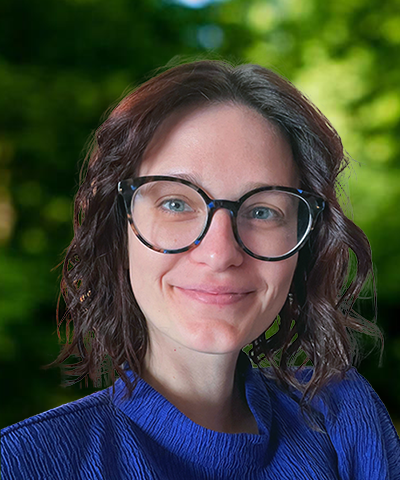
Erin Swakopf | Forensics Operations Manager | TCDI
Erin Swakopf is a skilled Operations Manager in the Forensics department at TCDI, where she plays a pivotal role in our Employee Data Theft Investigation Service. Her diverse skill set and expertise allow her to address the unique challenges presented by these investigations, delivering exceptional results for our clients.
Within the program, Erin excels at preserving and analyzing electronically stored information (ESI) from various media sources. Her keen eye for detail and ability to identify anomalies indicative of data theft enable organizations to proactively address potential breaches and protect their sensitive information.
Jason Bentley | Project Director, Client Services | TCDI
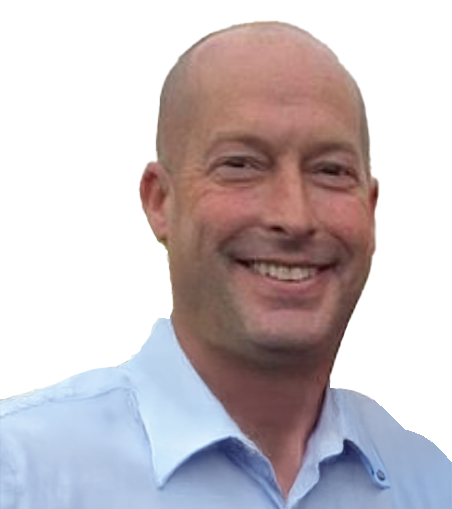
Jason Bentley served as a Project Director in Client Services at TCDI, where he guided clients through complex litigation matters. His work spans antitrust, product liability, patent, and business disputes, with a strong foundation in electronic discovery and all phases of document management. Known for his client-centered approach, Jason emphasizes collaboration while helping organizations achieve efficiency, manage costs, and maintain predictability. He earned his Juris Doctorate in 2008 and is licensed to practice law in Tennessee.
Jennifer Andres | Vice President, MSMR Program | TCDI
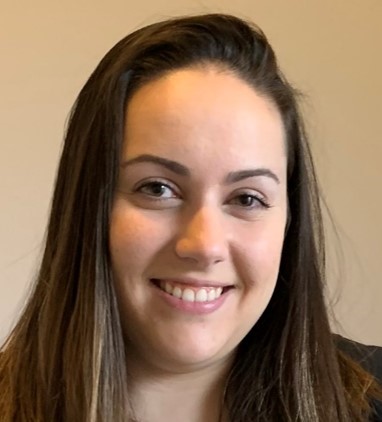
Jennifer Andres serves as the Vice President of TCDI’s Military Spouse Managed Review (MSMR) program. As a military spouse herself, she was a driving force in it’s development, which creates meaningful career opportunities for attorneys and legal professionals in similar situations. Bringing more than a decade of hands-on document review experience to her role, Jennifer oversees the full lifecycle of review projects, from team development and project kickoff through quality control and daily execution.
Meet Our Host

Michael Gibeault | Senior Vice President, Legal Services | TCDI
As Senior VP, Legal Services, Michael Gibeault works closely with corporate legal and law firm clients alike, providing forensics, eDiscovery, and managed document review solutions while managing a team of Legal Services Directors.
Michael’s tenured career has focused on supporting law firms and corporate legal departments with creative and cost-effective solutions that rely on cutting-edge technology and highly skilled legal professionals. Prior to joining TCDI in 2017, he served in executive positions at DTI Global, Epiq, Robert Half International, LexisNexis, and Martindale Hubbell.

Only Have a Minute? Check Out the Highlights!
In Case You Missed It